Striped Shore Crab (Pachygrapsus crassipes) & Purple Shore Crab (Hemigrapsus nudus)
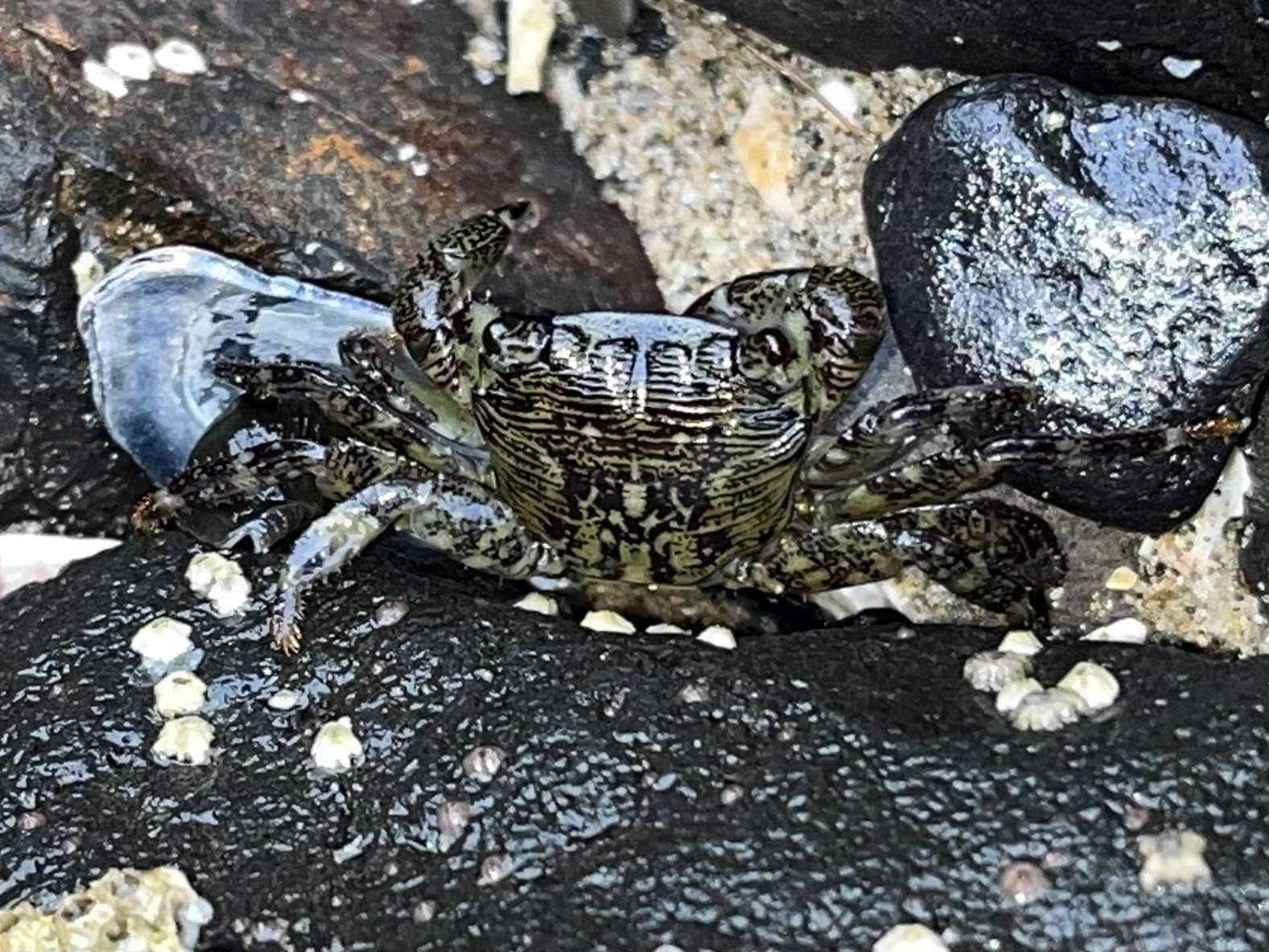
Striped shore crab (photo credit: Lauren Rice)
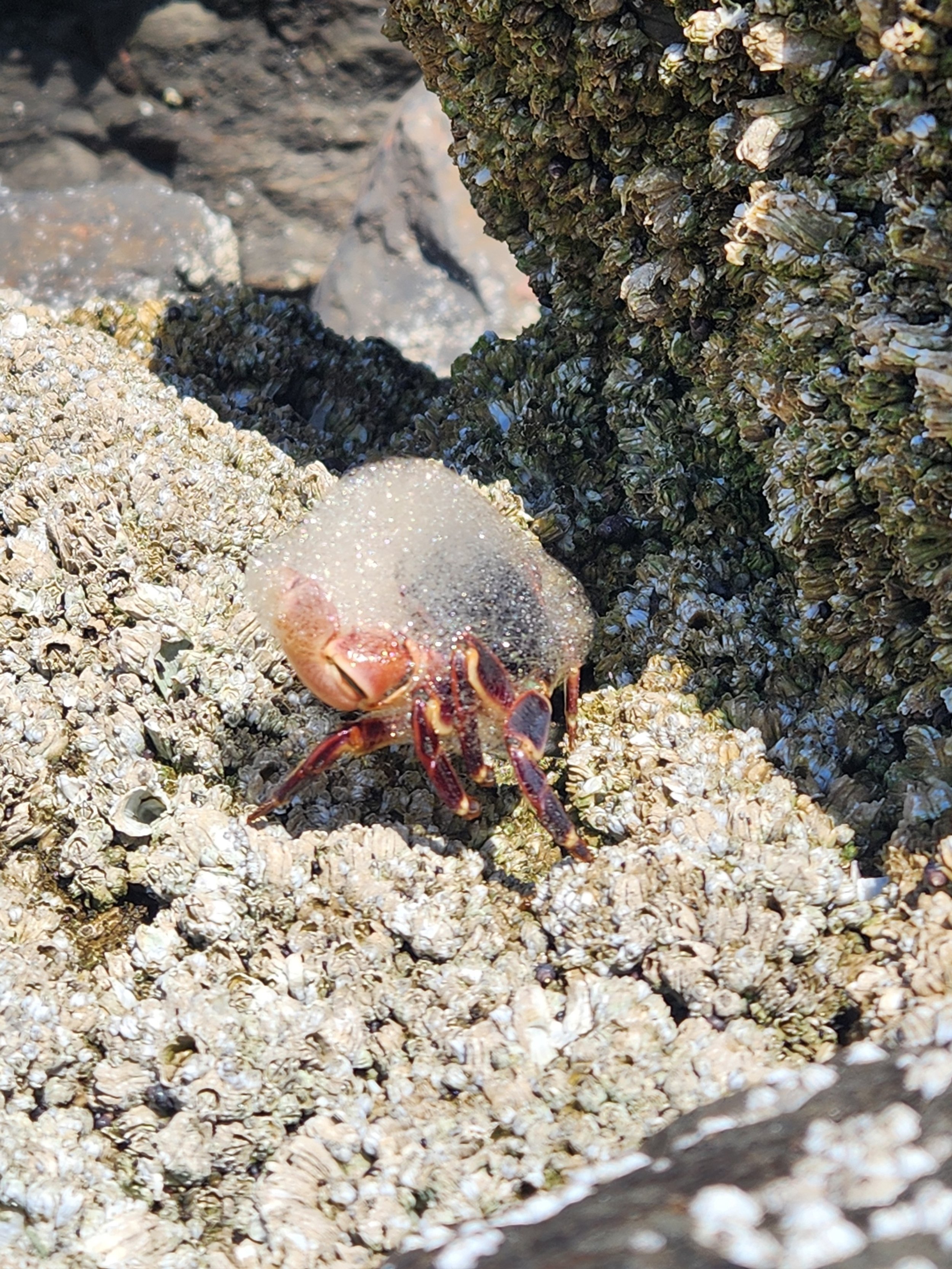
Purple shore crab blowing bubbles (photo credit: Katie Corliss)

Striped shore crab hiding in a rock crevice among barnacles (photo credit: Katie Corliss)
Description: Striped or lined shore crabs have dark red-purple to black legs and claws as well as dark backs striped with thin bright-green horizontal lines. Purple shore crabs are usually purple or dark red but can also come in shades of dark green or reddish-brown. The chelipeds, or pinchers, are often lighter colored and have darker spots on them. Males and females of both species can reach around 5 cm in width, making these a rather small variety of crab.
Habitat: Both shore crabs are a common intertidal species of crab found along the coast from Oregon down to Baja California, Mexico with Purple shore crabs also ranging up to southern Alaska. On the other side of the Pacific Ocean, they are found along the Japanese and Korean coastlines. At Haystack Rock, shore crabs can be found hiding in crevices, like between rocks or within mussel beds.
Diet: They use their tiny but mighty pincers to tear up pieces of algae for food, but sometimes they’ll also eat creatures like limpets, amphipods, snail eggs, and even other small crabs.
Tide Pool Tidbits:
These crabs are often seen bubbling at the mouth. This is common behavior in species that spend a considerable amount of time out of the water. In order to keep their gills wet while still absorbing the oxygen they need to breathe, they will often blow air over the water in their gills to aerate the water. This forms bubbles!
Each female can produce up to 50,000 eggs in one clutch.
References:iNaturalist, Morro Bay NEP, Walla Walla University, Biology Insights, Oregon Coast Aquarium